



Do you feel back pain and numbness in your limbs?These are the first signs of osteochondrosis.Inadequate mobility in lifestyle, sedentary work, stress on the neck and spine cause cartilage wear and moisture loss, resulting in damage.
With cervical osteochondrosis, degenerative changes occur in the intervertebral discs.Not only the discs, but also the vertebrae and joints in the cervical region are damaged.If the disease is not treated for a long time, the general well-being of the patient deteriorates: constant headaches, the appearance of vertebral hernias, deterioration of cerebral circulation, as a result of which cognitive functions decrease.
Reasons for the development of osteochondrosis
Incorrect sitting position, in which the neck is pushed forward, leads to the development of cervical disease.In this case, excessive pressure occurs in the intervertebral discs, which causes changes in the nucleus pulposus and compression of blood vessels.This is the position a person takes in front of a computer at work.Therefore, office workers are most likely to develop osteochondrosis of the cervical spine.

In addition, there may be reasons for the development of pathology:
- improper distribution of the load when carrying a bag;
- excessively soft sleeping position (the spine bends in an unnatural shape);
- genetic predisposition;
- lack of vitamins and trace elements in the diet;
- disorders of the endocrine system;
- curvature of the spine and poor posture during active growth of the body;
- damage to the cervical vertebrae;
- the presence of bad habits.
Stages of the disease
After examination and palpation, only an experienced doctor can determine whether your pain symptoms are signs of the development of cervical osteochondrosis and at what stage the disease is developing.In general, cervical osteochondrosis goes through four stages of development:
- Nucleus pulposus - in the first stage, the central part of the intervertebral disc is moderately dehydrated.As a result, the supporting and shock-absorbing functions of the intervertebral discs are gradually lost.In the first stage, you will feel pain with sudden movements, hypothermia and staying in one position for a long time.
- The second stage of development is characterized by the appearance of congestion and spasms, which prevent normal blood circulation and squeeze capillaries and blood vessels.As a result, the frame of the intervertebral disc becomes thinner, forming a protrusion (bulging forward or backward).Under the influence of excessive load, osteophytes are formed on the cervical vertebra.Pain sensations are localized in one place;with sudden turns and bends of the head, dislocation of the cervical vertebrae can occur.
- Extrusions are caused by thinning of the intervertebral discs.The edge of the nucleus pulposus breaks the annulus fibrosus and protrudes beyond the edges of the vertebral body.Muscles and nerve endings are compressed.Pain is felt in the neck, back and limbs.
- In the fourth stage of the disease, intervertebral discs are displaced and central and lateral tears are formed.In addition, discs form scars, which leads to immobility of the affected joint.The patient experiences constant back pain spreading to other parts of the body, a feeling of constant fatigue, and asymmetry of body parts.

Symptoms of cervical osteochondrosis
Symptoms of osteochondrosis of the cervical spine are manifested differently depending on the stage of development of the pathology.In the early stages, it can occur practically without any symptoms.Pain in the neck and back can only be felt when you stay in one position for a long time or bend or turn sharply.
In the later stages of development, a creaking sound is heard in the spine, back pain spreads to other limbs, numbness occurs in some parts of the body.During the formation and extrusion of osteophytes, the following occurs:
- headaches in the back of the head and in the parietal part;
- speech disorder and numbness of the tongue;
- decreased sensitivity of the skin of the neck;
- respiratory disorders;
- changes in blood pressure;
- heart failure;
- noise and congestion in the ears;
- don't faint.
Symptoms of osteochondrosis of the cervical spine in women are more obvious than in men.This is due to women's tendency to vascular diseases and a more fragile structure of the bone segments of the spine.Symptoms of the disease begin to appear when the intervertebral discs change.This leads to disruption of normal blood circulation and causes severe headaches, dizziness, neuroses.Exacerbation of the disease in women often occurs during menopause, when the body undergoes hormonal changes.
Symptoms of cervical osteochondrosis in men are the same as in women;erectile dysfunction can also be observed.
Headache with cervical osteochondrosis is caused by poor circulation in the brain and spinal cord.When the vertebrae are misaligned, it compresses the arteries and reduces the amount of oxygen in the blood.Unfortunately, even after taking strong painkillers, the pain cannot go away.Therefore, it is important to take a complex approach to solving the problem.Dizziness with cervical osteochondrosis can be accompanied by the appearance of black eyes and tinnitus.This happens because the spasmed muscles cause a decrease in the supply of oxygen to the brain.
With osteochondrosis of the cervical spine, a lump in the throat, as well as burning, breathing difficulties and muscle spasms are a common phenomenon.The disease causes compression of the nerve fibers of the cervical spine to the head and neck.Disruption of nerve impulses causes sore throat.
Jumps in blood pressure occur due to spasms of blood vessels and irritation of nerve endings.An increase in low pressure in osteochondrosis indicates that the blood supply to certain areas of the brain is disturbed, because the vertebral artery is compressed by the intervertebral discs.As a result, oxygen starvation occurs and blood pressure rises.
How is osteochondrosis of the cervical spine diagnosed?
Diagnosis of pathology begins with a consultation with a specialist.At the first manifestations of osteochondrosis, consult a rheumatologist, neurologist, surgeon or traumatologist-orthopedic.The doctor will ask about symptoms and how often they occur;you must provide the specialist with a complete medical history and the results of previous studies (if any).The specialist will conduct a visual examination and palpation and send you for tests.During the examination, the doctor pays special attention to neck mobility, muscle tone, skin sensitivity and identifies the most painful places.
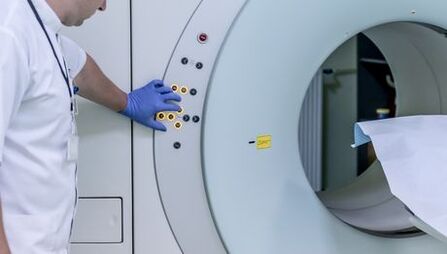
In order to determine the condition of muscles, ligaments, blood vessels and detect inflammatory processes or tumors, an informative and safe diagnostic method is prescribed - MRI of the cervical spine.During the MRI of osteochondrosis, the patient lies on a special sliding table with his back.To relieve muscle tension, rolls are placed on the patient's head and the limbs are secured with belts.Any small movement during the procedure can affect the quality of the result.Then the table moves to the tomograph area.The procedure does not cause pain.The tomograph makes a lot of noise during the scan, so you can use headphones to avoid discomfort.
If MRI is contraindicated, other diagnostic methods such as computed tomography and radiography are available.X-rays are suitable only for initial diagnosis and do not provide a layered image of the affected tissue.However, this study is the simplest and most economical, allowing to check the patient's body in several projections.X-rays cannot be taken often due to the strong exposure of the body to radiation.
During computed tomography, scanning is performed using one or more beams of ionizing radiation.They pass through the human body and are recorded by detectors.The detectors move in opposite directions along the patient's body and record up to 6 million signals.In the picture, tissues of different density are shown in the form of a cross-section, with the precise definition of the boundaries of organs and affected areas.The procedure allows you to get a layered image.

Treatment of osteochondrosis of the cervical spine
How to treat cervical osteochondrosis will be determined by the doctor only after examination, studying the medical history and obtaining the results of hardware diagnostics.If the disease is detected at an early stage, the treatment will be carried out by conservative methods.It is important to follow a complex approach to the treatment of osteochondrosis - take medication, engage in physical therapy, go to therapeutic massage and avoid heavy physical activity.
First, you need to relieve the pain.Analgesics and local painkillers are prescribed for this purpose.An orthopedic collar is prescribed for severe muscle spasms.After the pain syndrome is eliminated, it is necessary to stop the inflammatory process and restore normal blood circulation.For this purpose, antioxidant and anti-inflammatory therapy is carried out.Therapeutic exercises and swimming are prescribed as additional measures.You can do physical exercises both at home and with a trainer.
If osteochondrosis worsens, the doctor may prescribe surgery.Surgery is rarely used when the pathology develops against the background of other diseases - scoliosis, ruptured intervertebral discs, curvature or displacement of the spine, injuries.
The treatment of cervical osteochondrosis in women is not particularly different from the treatment of men.However, doctors often advise women to do external compresses to warm and strengthen the neck muscles.
Experts recommend preventing various back diseases from early childhood.For this, you need to form the correct posture while walking and sitting at your desk.Eating right and properly strengthening your back muscles will help you avoid negative consequences in the future.